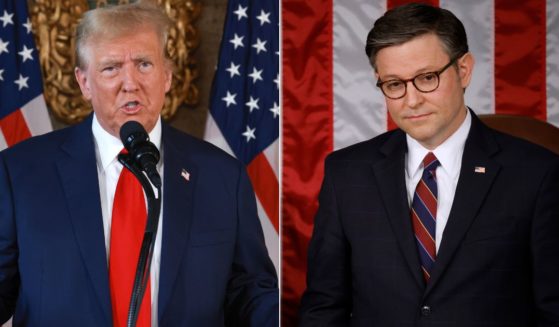
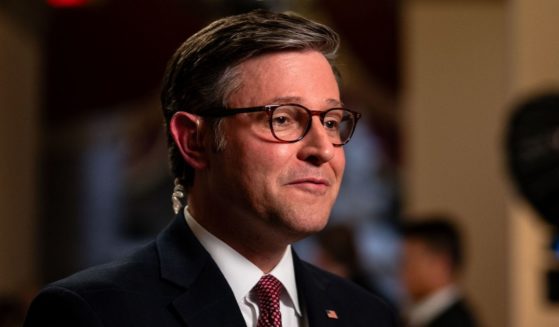
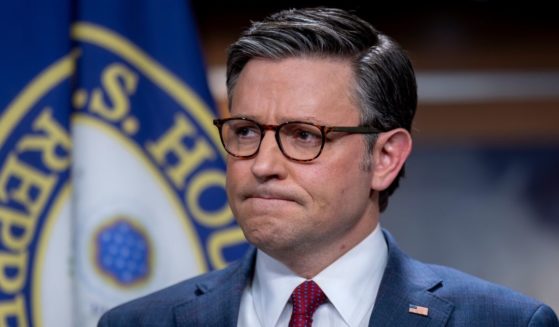
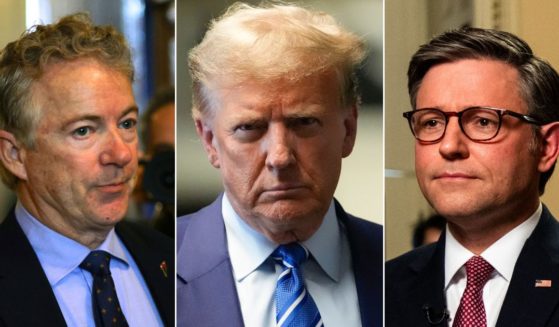
Rep. Mike Rogers (R-Ala) regurgitates the talking points that a popular election overrules the Constitution, in spite of Obama violating the Constitution directly in several ways already…
Obama To Issue Executive Order For CISPA Next Tuesday
The Cyber Intelligence Sharing and Protection Act, CISPA is set to be re-introduced before the US House next week. The bill will be identical to the one introduced last spring, that was defeated on the Senate floor in August of last year.
The house Intelligence Committee chairman Mike Rogers (R-Mich.) and Representative Dutch Ruppersberger (D-Md) will attempt the re-introduction based on a spate of cyber espionage and hacking attacks.
Civil liberties groups have criticized the bill for invading privacy. CISPA allows for the voluntary sharing of information about internet traffic between private companies and the government. Its intention is to assist the intelligence service in identifying and neutralizing cyber and hacking attacks and to ensure the security of networks against attack .
The bill would also allow the government to pass information to private companies and protect them from legal actions that may arise from the sharing of information.
Opponents of the bill say it will allow government to track an individuals browsing information, allowing them to spy on individuals at will.
Read More at thedailysheeple.com . By Chris Carrington.
The Members Behind The Purge Of Conservatives
Yesterday, we noted that not only did House leadership select moderates to fill vacant spots on the top congressional committees, they made the unprecedented decision to banish conservatives already sitting on some important committees. All of the decisions related to committee assignments are decided by a Steering Committee. At present, the Steering Committee is comprised of 31 members, most of who are either members of leadership or pushed onto the committee by leadership. These are the men and women behind the decision to throw conservatives under the bus.
It’s important to note that Boehner gave himself 5 votes and Cantor 2 votes on the committee, so there are actually a total of 36 votes on each committee assignment decision. Here is the list of the committee members:
John Boehner Speaker
Eric Cantor Republican Leader
Kevin McCarthy Republican Whip
Peter Roskam Chief Deputy Whip
Cathy McMorris-Rodgers Republican Conference Chair
James Lankford Policy Chair
Lynn Jenkins Conference Vice-Chair
Virginia Foxx Conference Secretary
Greg Walden NRCC Chairman
Tom Cole NRCC Chairman (former)
Hal Rogers Chairman Appropriations Committee
Fred Upton Chairman Energy & Commerce Committee
Jeb Hensarling Chairman Financial Services
Pete Sessions Rules Committee
Dave Camp Chairman Ways & Means Committee
Paul Ryan Chairman Budget Committee
Lamar Smith Texas Representative
Doc Hastings Region I Representative
Tom Latham Region II Representative
John Shimkus Region III Representative
Mike Rogers Region IV Representative
Bill Shuster Region V Representative
Pat Tiberi Region VI Representative
Steve Scalise Region VII Representative
Lynn Westmoreland Region VIII Representative
Bob Goodlatte Region IX Representative
Ken Calvert Region X Representative
Jeff Miller Region XI Representative
Cynthia Lummis Small State Representative
Joe Heck 112th Class Representative
Richard Hudson 113th Class Representative
As you can see, more than half the votes are already selected by leadership. As such, conservatives see no purpose in running for the 11-12 regional representative spots because they will inevitably be outnumbered. Also, in past years, when conservatives tried to run for regional rep slots, leadership shifted around the regions to preclude them from getting on the committee.
It’s interesting to note that the representative from the class of 2010 is Joe Heck, one of the most liberal members. The representative for the incoming freshman class is…..Cantor’s altar boy, representative-elect Richard Hudson (NC-8).
The other peculiar thing is that Steve Scalise is on the committee. In past years, leadership has refused to put the RSC chairman on the committee, even though he commands the largest caucus in the House. Yet this year, Scalise, the incoming chairman, made his way onto the committee.
Folks, this is just the beginning, and these people need to hear from all of us. Please call these members and ask them how they feel about conservative Reps. Schweikert, Amash, and Huelskamp being thrown off their committees. Ask them if they were a part of the decision. Steve Scalise, as the incoming leader of conservatives, should be leading the charge on the committee against the purge. It would be interesting to get his take on yesterday’s developments.
This is just the opening salvo in a long war. House leaders have made it clear that they will punish conservatives for standing by their election promises. All conservatives in the House need to band together on this because anyone could be next.
Ultimately, there’s only one way to win this. We must overwhelm them with greater numbers in congressional primaries.
By Daniel Horowitz, Red State.
House Intel Chair: ‘Appointees From Administration’ Changed Rice’s Talking Points
(CNSNews.com) – Who changed the CIA talking points to minimize the fact that terrorists were behind the attack on the U.S. outposts in Benghazi?
When Susan Rice, the U.S. ambassador to the U.N., went on five Sunday talk shows five days later, she was still blaming the attack on a spontaneous protest over an obscure anti-Islam video.
Rep. Mike Rogers (R-Mich.), chairman of the House intelligence committee, says the unclassified talking points put together by the CIA changed when they got to administration appointees:
“[T]here was not an intelligence failure,” Rogers told “Meet the Press” on Sunday.
Read More at CNS News . By Susan Jones.
Here It Goes Again: Congress Seeking To Control Internet With New Bill
Congress is doing it again: they’re proposing overbroad regulations that could have dire consequences for our Internet ecology. The Cyber Intelligence Sharing and Protection Act of 2011 (H.R. 3523), introduced by Rep. Mike Rogers and Rep. Dutch Ruppersberger, allows companies or the government free rein to bypass existing laws in order to monitor communications, filter content, or potentially even shut down access to online services for “cybersecurity purposes.” Companies are encouraged to share data with the government and with one another, and the government can share data in return. The idea is to facilitate detection of and defense against a serious cyber threat, but the definitions in the bill go well beyond that. The language is so broad it could be used as a blunt instrument to attack websites like The Pirate Bay or WikiLeaks. Join EFF in calling on Congress to stop the Rogers’ cybersecurity bill.
Under the proposed legislation, a company that protects itself or other companies against “cybersecurity threats” can “use cybersecurity systems to identify and obtain cyber threat information to protect the rights and property” of the company under threat. But because “us[ing] cybersecurity systems” is incredibly vague, it could be interpreted to mean monitoring email, filtering content, or even blocking access to sites. A company acting on a “cybersecurity threat” would be able to bypass all existing laws, including laws prohibiting telcos from routinely monitoring communications, so long as it acted in “good faith.”
The broad language around what constitutes a cybersecurity threat leaves the door wide open for abuse. For example, the bill defines “cyber threat intelligence” and “cybersecurity purpose” to include “theft or misappropriation of private or government information, intellectual property, or personally identifiable information.”
Yes, intellectual property. It’s a little piece of SOPA wrapped up in a bill that’s supposedly designed to facilitate detection of and defense against cybersecurity threats. The language is so vague that an ISP could use it to monitor communications of subscribers for potential infringement of intellectual property. An ISP could even interpret this bill as allowing them to block accounts believed to be infringing, block access to websites like The Pirate Bay believed to carry infringing content, or take other measures provided they claimed it was motivated by cybersecurity concerns.
The language of “theft or misappropriation of private or government information” is equally concerning. Regardless of the intent of this language, the end result is that the government and Internet companies could use this language to block sites like WikiLeaks and NewYorkTimes.com, both of which have published classified information. Online publishers like WikiLeaks are currently afforded protection under the First Amendment; receiving and publishing classified documents from a whistleblower is a common journalistic practice. While there’s uncertainty about whether the Espionage Act could be brought to bear against WikiLeaks, it is difficult to imagine a situation where the Espionage Act would apply to WikiLeaks without equally applying to the New York Times, the Washington Post, and in fact everyone who reads about the cablegate releases. But under Rogers’ cybersecurity proposal, the government would have new, powerful tools to go after WikiLeaks. By claiming that WikiLeaks constituted “cyber threat intelligence” (aka “theft or misappropriation of private or government information”), the government may be empowering itself and other companies to monitor and block the site. This means that the previous tactics used to silence WikiLeaks—including a financial blockade and shutting down their accounts with online service providers—could be supplemented by very direct means. The government could proclaim that WikiLeaks constitutes a cybersecurity threat and have new, broad powers to filter and block communication with the journalistic website.
Read More at Electronic Frontier Foundation By Rainey Reitman and Lee Tien, Electronic Frontier Foundation


Harry Reid Is Done For
Republicans are excited about the prospect of controlling the Senate majority after the 2014 elections. In order to seize control, Republicans need to pick up six seats. This would have a huge impact on Obama’s ability to set the agenda and influence your life.
Democrats have the edge, but they must defend 20 seats, including seven seats in states that President Obama lost in 2012. Already, five Democratic incumbents have thrown in the towel, announcing plans to retire.
History is with the Republicans. During midterm elections, a president’s party often loses Senate seats. Here is a state-by-state roundup of Senate seats in play. We will update these races periodically.
Alaska
Democrats control this seat with freshman Senator Mark Begich, even though Obama lost Alaska in both 2008 and 2012. Begich only won this race by 1% of the vote because longtime Senator Ted Stevens was under the cloud of a Justice Department investigation.
Begich has worked hard, but anti-Obama sentiment is likely to be his undoing. Several strong candidates, including 2008 GOP Senate nominee Joe Miller, are considering the race.
Early prognosis: The Republicans pick up a seat (+1)
Arkansas
Barack Obama only received 36.88% of the vote in Arkansas in 2012. The President is very unpopular there, and he could bring down Democratic Senator Mark Pryor. Obamacare is also unpopular in Arkansas, and it will be used against Pryor (who voted for it.)
Republicans need to find a strong candidate to challenge Pryor. Last time Pryor ran, Republicans failed to field a candidate against him.
Rep. Tom Cotton, a rising conservative star, would be a formidable challenger to Pryor. Cotton is an Iraq War veteran and a favorite of Club for Growth and other conservative groups.
A poll released in mid-March showed Cotton leading Pryor, 43 percent to 35 percent. Cotton hasn’t decided what to do, but Republicans would be smart to urge him to run.
Early prognosis: Democrats hold Arkansas unless the GOP can produce a strong challenger (+0)
Iowa
Senator Tom Harkin, a fixture in Iowa politics for decades, is finally retiring. This gives Republicans a shot to win.
Even though Obama carried the state in 2012, Iowa remains very competitive for Republicans. Rep. Steve King has already thrown his hat in the ring, and he would be a strong contender. But don’t count on Republicans to pull together. King is one of the candidates D.C. GOP operative Karl Rove has targeted. Rove may spend big money against King, damaging his chances in the fall.
Early prognosis: Republican infighting keeps this seat Democrat (+0)
Louisiana
The Pelican State has been trending Republican, but Democratic Senator Mary Landrieu was re-elected with 52% of the vote in 2008. And as a long-term officeholder, she has to be considered the likely winner.
All of the Republican Party Congressmen from Louisiana will be competing for the GOP nomination to challenge Landrieu. Unfortunately for the Republicans, all of the challengers trail her in fundraising.
It will not be easy getting the better of Landrieu, but it is not impossible either. Unfortunately, the popular GOP Governor Bobby Jindal took a pass on this race.
Early prognosis: The Democrats will hold Louisiana (+0)
Michigan
Nobody thinks of Michigan as Republican; but with the insolvency of Detroit, the finances of the state have forced voters to turn to the GOP for answers. Obama carried Michigan in the presidential race, but the GOP did very well down ticket.
Longtime Democratic Senator Carl Levin has decided to retire, and it could provide Republicans with an opening. Three Republican Congressmen are looking at the race: Reps. Dave Camp, Mike Rogers, and Justin Amash, a Tea Party favorite. Scott Romney, brother of Mitt Romney, is also looking at the race.
Early prognosis: Bad finances and strong Republican candidates give the GOP another seat (+1)
North Carolina
Democrat Sen. Kay Hagan rode Obama’s coattails into office in 2008 and defeated incumbent Senator Elizabeth Dole. But North Carolina swung hugely Republican in 2012.
Now, every poll has Hagan below 50%, which is definitely a good sign for Republicans. Optimism has launched a crowded field into the GOP primary.
Early prognosis: The GOP should easily win here (+1)
South Dakota
Winds of change led three-term incumbent Democrat Senator Tim Johnson to tuck tail and retire. Popular two-term Republican Gov. Mike Rounds has announced his intention to run.
Early prognosis: The Republicans will only lose this one if they really screw up (+1)
Virginia
GOP chances in Virginia are slim unless Gov. Bob McDonnell, who has reached his term limit in the governor’s mansion, decides to run. But incumbent Democratic Senator Mark Warner is also popular, so the race won’t be easy.
On top of that, Virginia residents’ jobs are often dependent on federal spending. So it won’t be easy for any fiscally responsible Republican to win in Virginia. McDonnell probably gives the GOP its best shot.
Early prognosis: Chances are slim at this point (+0)
West Virginia
Democratic incumbent Senator Jay Rockefeller decided not to run for re-election. President Obama lost this state twice because of his stands against increasing coal-generated electricity, and he remains unpopular. The GOP has an excellent opportunity to win this WV Senate seat. Republican Rep. Shelley Moore Capito is running, and very early opinion polls give her a lead.
Early prognosis: This seat is likely Republican (+1)
The Final Count
The early analysis shows that the Republicans will likely pick up five seats. It would only take one GOP win in a closely contested race in Arkansas, Iowa, Louisiana, or Virginia to retire Harry Reid and change the face of Washington.
This article originally appeared at CapitoHillDaily.com and is reprinted here with permission.
Photo credit: terrellaftermath